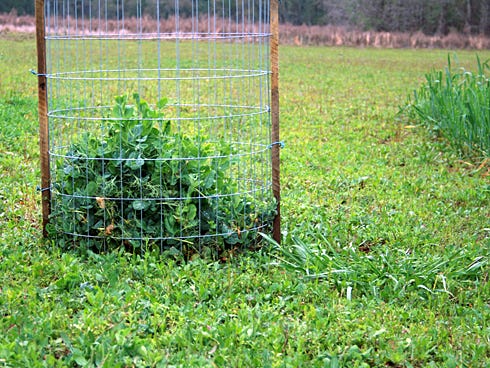

It’s time to start planning cool-season wildlife food plots. (These attract deer and other wildlife to your property, and they provide some nutrition.)
First, choose an appropriate location. Remember: Wildlife like to stay close to cover, but plants need sunlight. Cool-season food plots are generally smaller than warm-season food plots. (About an acre or so is sufficient.)
Next, have your soil tested. Soil test results provide important information like pH, phosphorus levels and potassium levels. Perform the soil test now so you have more time to adjust the pH. Adjust pH if necessary with lime applications.
Finally, choose from cool-season forage options as follows.
•Legumes: arrowleaf clover, crimson clover, ball clover, red clover, white clover, vetch and winter peas, to name a few.
Legumes need to be inoculated with a rhizobium bacteria before planting. This allows the plant to manufacture nitrogen and eliminate the need for extra nitrogen application.
•Grasses: ryegrass, oats, wheat, rye, and triticale (a human-made cross of wheat and rye).
•Brassicas like kale, turnips and tillage radish
•Forage chicory
Most of these plants' pH range will be between 5.5 and 7.0. I recommend planting a mixture of these forages. One mixture that had a lot of success in our research plots in Quincy included arrowleaf clover, red clover, crimson clover, white clover, buck forage oats and tillage radish. The target pH for that mixture would be 6.0.
Learn more about cool-season wildlife food plots at http://edis.ifas.ufl.edu/ag139 or email your questions to me at bearden@ufl.edu.
Jennifer Bearden is an agent at the University of Florida's Extension office in Crestview.
This article originally appeared on Crestview News Bulletin: EXTENSION CONNECTION: Hunters, here's how to attract more wildlife