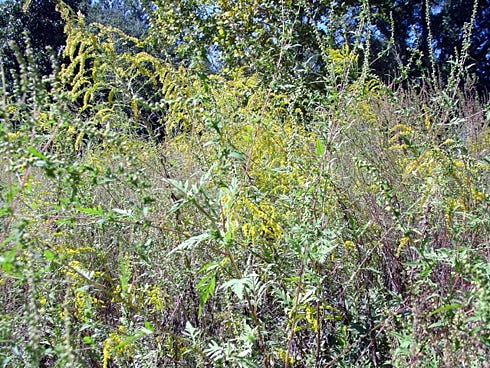

Goldenrod, with its yellow flowers held high on stems swaying by autumn winds, is a familiar sight this time of year.
This plant often is blamed for the sneezing, runny nose and itchy eyes that many people have while goldenrod blooms. But ragweed is the common culprit causing these allergy symptoms.
Ragweed — which blooms the same time as goldenrod: August to frost — releases billions of tiny, lightweight pollen grains into the air this time of year. Its pollen causes much of the hay fever problems.
Goldenrod's pollen is too large, heavy and sticky to be windborne. It relies on insects to carry its pollen.
I suppose if you put your nose right up into a cluster of goldenrod flowers and took a big sniff, you might be bothered by the pollen, but otherwise, it’s not going to get into your nose.
Goldenrod is an innocent bystander; ragweed remains camouflaged, releasing its pollen. Ragweed visually blends in with other green plants.
Despite the fact that common ragweed, an annual, can grow 3 to greater than 6 feet tall, it just does not get your attention.
It is quite common along roadsides, vacant lots and abandoned fields. Its inconspicuous flowers start out green, similar in color to the leaves; they turn a yellowish green and finally dry to a brown color. They are never showy.
Enjoy goldenrod's blooms this fall, but please do not blame them for your allergies.
Larry Williams is an agent at the University of Florida's Extension office in Crestview.
This article originally appeared on Crestview News Bulletin: EXTENSION CONNECTION: Blame ragweed, not goldenrod, for fall hay fever