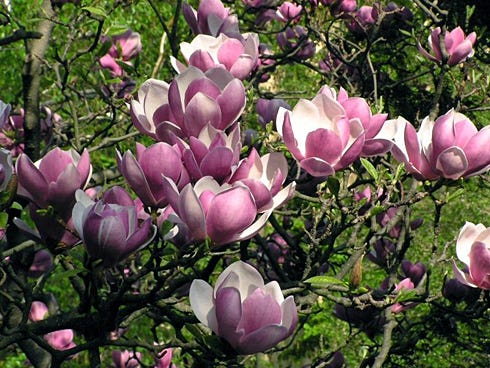

The saucer magnolia — Magnolia x soulangeana — is one of the earliest flowering trees to bloom.
The goblet-shaped, pink to purple blooms cover the deciduous tree's bar stems just before leaves emerge. Each flower is 3 – 6 inches in diameter, and takes on a tulip-like structure that fully opens into a saucer position, earning the tree its two most common names: tulip or saucer magnolia.
This hybrid's parents are Magnolia liliifolia and Magnolia denudata, which are both native to Japan, logically leading to an additional common name — Japanese magnolia.
The genus Magnolia is one of the most ancient genera among flowering plants, with fossils dating more than 100 million years.
Similarly, beetles in the Nitidulidae family that existed back then are still the magnolia flowers' principal pollinators.
How to care for them
Magnolias are shallow-rooted plants, and one of the surest ways to retard or possibly kill a new tree is to plant it too deeply.
When installing a saucer magnolia, locate the topmost root and position it slightly above the surrounding soil grade. Avoid disturbing the roots after planting.
Magnolias prefer to be grown in well-drained, moist soil. However, once established, they need no more than 20 inches of rain per year.
Mature trees can reach 20-30 feet tall, though the saucer magnolia is a fairly slow grower. Pruning can be done as needed after flowering, but before setting buds for next year.
The saucer magnolia's dramatic show of color is a wonderful break from winter's drabness.
Let's just hope that the last few frosts don't cut the blooming period short.
Sheila Dunning is a Commercial Horticulture Extension agent at the Okaloosa County Extension office in Crestview.
This article originally appeared on Crestview News Bulletin: EXTENSION CONNECTION: Magnolias are a much anticipated first sign of spring