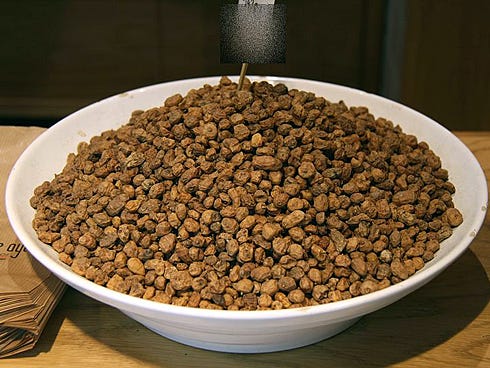

Chufa is an African variety of nutsedge. Some nutsedge varieties can be a weed, but chufas do not grow aggressively enough to become a problem.
The top of the plant looks like a grass, and this perennial sedge produces small tubers underground.
In Northwest Florida, you should plant chufas from April to July, depending on rainfall. Chufas grow well in sandy or loamy soils, but can be grown in clay soils. They prefer a pH of 6.0 to 7.0, so most local soils will need lime before planting. As always, I recommend a soil test before applying lime or fertilizers.
Chufas can be grown from seeds or dried tubers. The planting rate for tubers is 15 to 40 pounds per acre; planting rate for seeds is 40 to 50 pounds per acre. Your plot size can range from 1/4 acre to several acres.
Chufas take approximately 90 to 110 days to mature. And be aware: wild turkeys love chufas. When the tops turn brown, turkeys begin to scratch chufa tubers out of the ground. Wild hogs will also root up a chufa plot in a hurry.
For more information about chufas or wild turkeys, contact me at 689-5850 or email bearden@ufl.edu.
Speaking of turkeys, the National Wild Turkey Federation's Black Water Longbeards Chapter will hold its annual banquet Saturday, March 7 at the Crestview Community Center. Doors open at 5:30 p.m.; dinner starts at 7 p.m.
The single-ticket price is $55; a couple's tickets cost $85. The cost covers NWTF membership, which includes a magazine subscription to Turkey Country.
For more information or for tickets, contact Corolla Anderson, 306-1103.
Jennifer Bearden is an agent at the University of Florida/Institute of Food and Agricultural Sciences' Okaloosa County Extension office in Crestview.
This article originally appeared on Crestview News Bulletin: EXTENSION CONNECTION: Tips for planting chufas