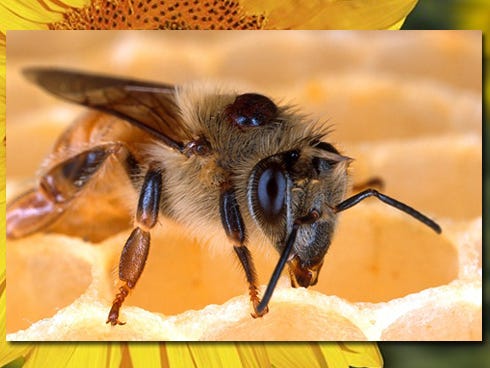

Anyone with a landscape can make a difference for pollinators.
Simply Having Areas Reserved for the Environment — see what I did there? — enables homeowners, land managers, farmers, individuals, corporations, schools, roadside managers, and golf courses to increase the number of area pollinators.
Making conscious choices about plants can provide essential habitat for bees,bats, birds, butterflies, moths, beetles and hummingbirds.
And what better time can you do this than during National Pollinator Week, June 15-21, 2015?
National Pollinator Week, initiated and managed by the North American Pollinator Protection Campaign, was unanimously approved and designated by the U.S. Senate in 2007.
Each year since, the U.S. Secretary of Agriculture has signed the proclamation in an effort to address the issue of declining pollinator populations.
Worldwide, there is evidence that shows pollinating animals have suffered from loss of habitat, pesticide misuse, competition from invasive species, disease and parasites.
Many pollinators are federally “listed species," meaning there is documentation confirming the disappearance or significant population reduction in natural areas.
The United States has lost over 50 percent of its managed honeybee colonies over the past 10 years. The European Union has been so concerned that they invested over $20 million investigating the status of pollinators in Europe.
Pollinator health affects everyone. Worldwide, roughly 1,000 plants grown for food, beverages, fibers, spices and medicines need to be pollinated by animals in order to produce the goods on which we depend.
Food and beverages produced with pollinators' help include: apples, blueberries, chocolate, coffee, melons, peaches, potatoes, pumpkins, vanilla, almonds and tequila.
In the U.S., pollination by honey bees, native bees and other insects annually produces $40 billion worth of products.
Native plants that can be identified and preserved or introduced include trees, shrubs, vines and perennials.
Some of them include: eastern redbud, highbush blueberry, passionflower, coreopsis, goldenrod, black-eyed Susan and butterfly milkweed.
Simply identifying and avoiding damaging many of the existing native plants will allow anyone to provide important homes and food for many different pollinating animals.
During National Pollinator Week, S.H.A.R.E. your space.
Sheila Dunning is a commercial horticulture agentat the University of Florida's Institute of Food and Agricultural Sciences Extension office in Crestview.
This article originally appeared on Crestview News Bulletin: DUNNING: Share your property with pollinators