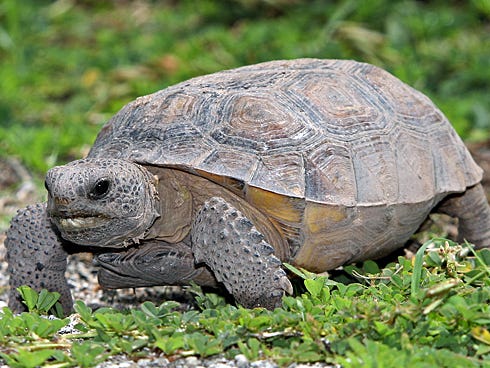

The Florida Fish and Wildlife Conservation Commission wants residents to know that not all turtles can swim.
The FWC received three reports of well-intentioned good Samaritans incorrectly releasing gopher tortoise hatchlings into the ocean.
Gopher tortoises cannot swim well, and can easily drown. Because gopher tortoises often nest in dunes adjacent to sea turtle nesting beaches, correct identification of these terrestrial animals is important before deciding what action, if any, is necessary.
You can inspect turtles' limbs from a distance to distinguish gopher tortoises from sea turtles. Gopher tortoises have toes, with claws on each toe. Sea turtles have flippers, with one or two claws present on each foreflipper.
See baby gopher tortoise photos at http://bit.ly/1F63Dep and baby sea turtles at http://bit.ly/1GYGzxB.
All five Florida sea turtles species are federally endangered or threatened and managed under the Endangered Species Act as well as under Florida Statutes; the gopher tortoise is listed under state law.
If you spot any of these species in danger on the beach, call the FWC’s Wildlife Alert Hotline at 888-404-FWCC (3922) or call #FWC or *FWC on your cell phone.
This article originally appeared on Crestview News Bulletin: 'Helping' this turtle in the water could kill it